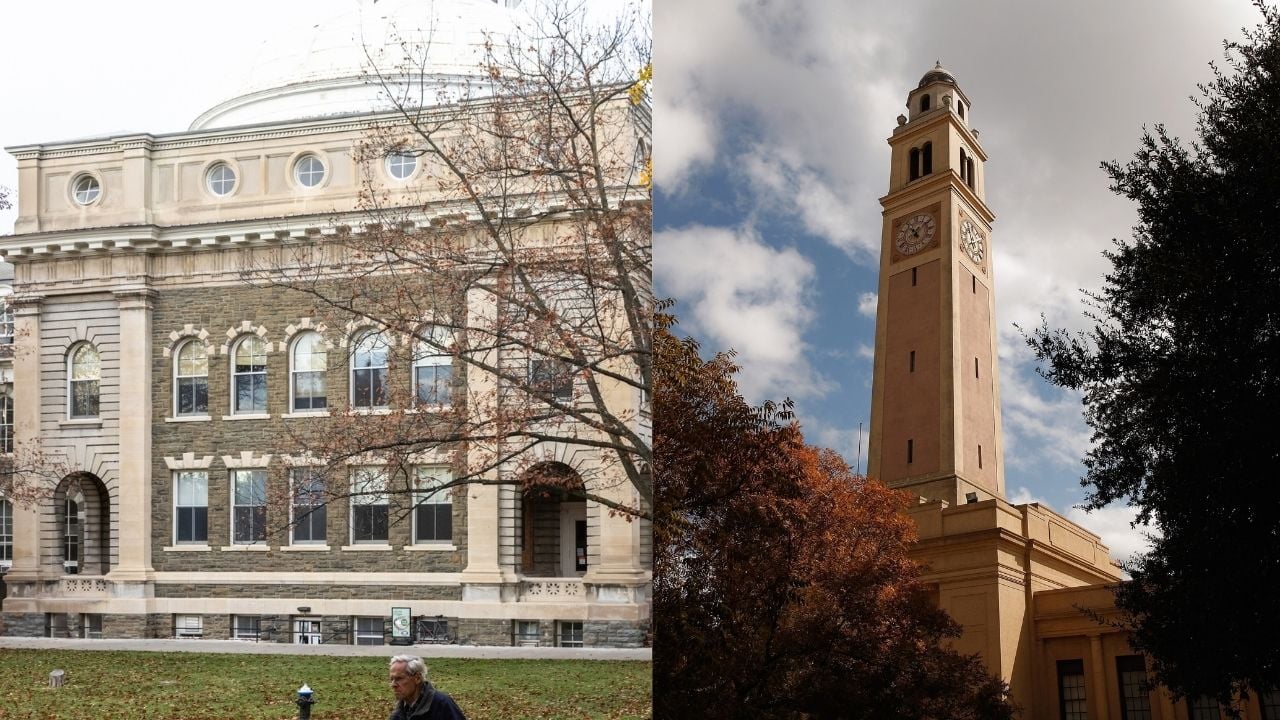
Messy love triangles, nostalgia, and real-world conversations all had their moment, but fashion was an undeniable star of Netflix’s “A Different World.” Whether the new Hillman class was chilling in Gilbert Hall or celebrating homecoming on the yard, their style took over social media. And behind every look, from Deborah and Rashida to Whitley and Dwayne, was Emmy-nominated costume designer Provi Fulp.
For Fulp, the job was personal. The Clark Atlanta University alumna grew up as a “mini Whitley Gilbert,” complete with white gloves and a vintage mink, and she knew the care and responsibility that came with dressing both Hillman’s legacy and its next generation.
“It was really important that everything was of excellence,” Fulp told theGrio. “Our community is so creative that someone had to create a box to put us in, because that’s how multilayered we are.”
In an exclusive interview with theGrio, Fulp opened up about the details behind the looks in Netflix’s No. 1 show, the Easter eggs fans may have missed, and the team of Black creatives and designers who helped bring Hillman to life.
This interview has been edited and condensed for length and clarity.
“A Different World” is such a big part of the culture. What was your relationship with the original show, and what went through your mind when you got the call?
The original show was my childhood. It shaped who I became. My family moved from Germany to the United States around 1989, and my mom introduced me to “A Different World.” I immediately fell in love with Whitley Gilbert. She was who I resonated with, so much so that my mom bought me the Tiffany phone and my first vintage mink, which I wore with my white gloves. I was a mini Whitley Gilbert. I tuned in to “A Different World” every week. It was my show.
I’d worked with Debbie Allen before on “Christmas on the Square,” a movie starring Dolly Parton, where she was our director, producer and choreographer. When she called me to do “A Different World,” I was so honored. Absolutely, yes. And it was in my city. We were going to do this in Atlanta, the home of HBCUs. I went to Clark Atlanta, and I’d worked with Jasmine Guy before. It was a full-circle moment and a dream come true.
Tell me about your approach to styling the OG and new Hillman class for this project
I took it as the ultimate creative challenge. Think about the legacy this show carries when it comes to looks. They were giving looks before anyone was even considering our community and how versatile we are.
It’s been 39 years, from the ’80s and ’90s to 2026. I had to understand what those looks meant for our legacy cast, and then imagine what this generation would stamp as its own style. We had to be purveyors of trend and style, just as they were. Yes, there are Easter eggs. But I wanted to go further. How did we evolve the original characters to now? And how do we make the new characters epic, something you’ve probably never seen, but still relatable? I didn’t want to go so far that they didn’t feel like real students. I wanted each character to have their own personality, so the world could see our layers, our depth and how different we are as a community. The original show did that, so I asked: What does that mean for this generation?
Then there’s HBCU culture. There’s a through line, a spirit, an energy that can’t be broken. That’s classic. That’s tradition. I wanted to hit that standard with the band and with the football jerseys. You usually don’t see HBCU football jerseys at that level. You only get that at the PWIs. I said, “This is Hillman College.” We made jerseys so fly that people would pay thousands of dollars to go to a Hillman game. From sketch to screen, it was really important that everything was of excellence. If you’re going to do the HBCU experience, you have to do it at the highest level. That’s why you see so much variety, down to the background, the interest groups, the glee club and the faculty. Every detail mattered.
Most people think of a costume designer as someone who dresses the main cast. What does the role actually involve?
People don’t always understand what a costume designer does. I design all the costumes, but I’m also a department head. I’m responsible for the entire look from sketch to screen. I have a whole department, including tailors and buyers, who execute the vision. I read the script first, then there’s research, sketching and fabric sourcing. All of that happens during prep, and then my team executes. So it’s very different from styling. I’m telling stories. Whether a character is sleeping, eating, happy, sad, or making a decision, that shapes the design. It’s not just putting clothes on people.
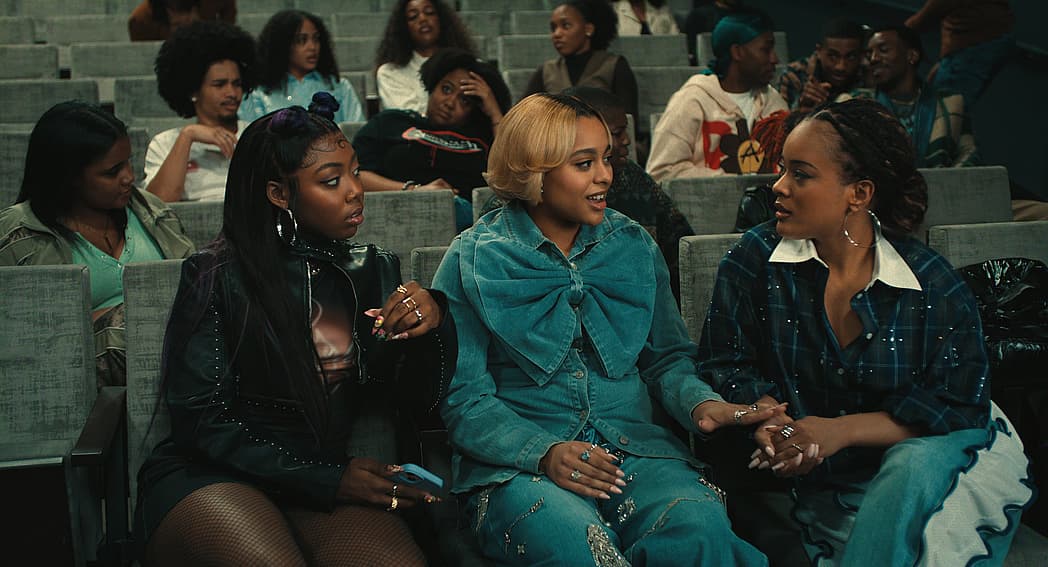
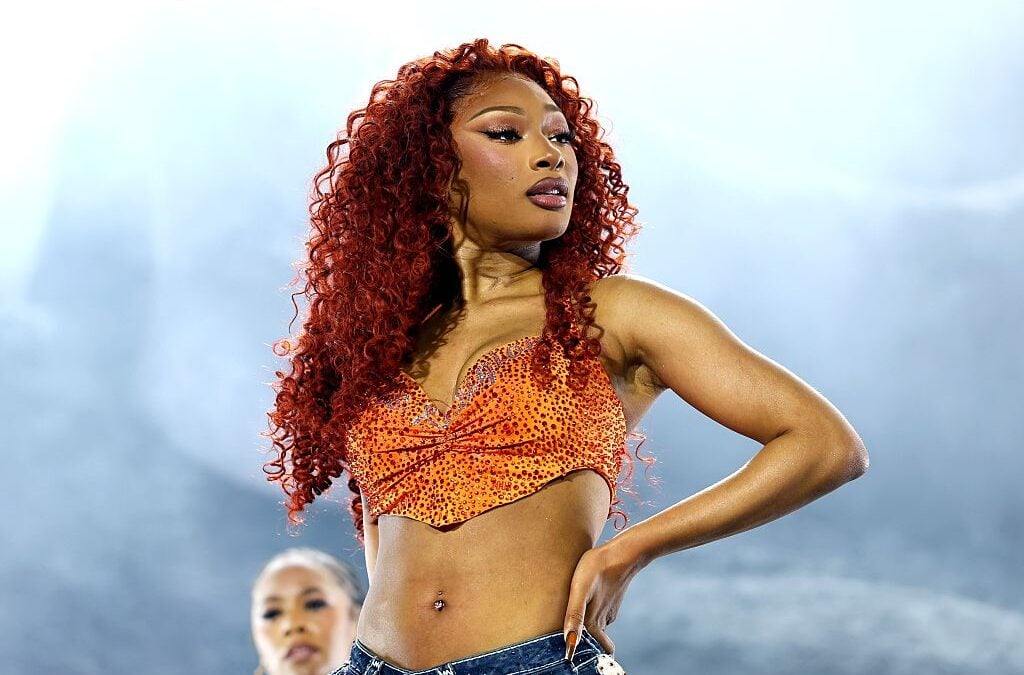

At the party, you’ll see a little sparkle. It’s Rashida’s moment, so we ombré her from head to toe. I wanted it elegant, but I still wanted that Compton. Our church girl goes through a transition to pageant girl. She’s in her church dress trying to get her groove on, then she’s blinged out, then she’s Miss Hillman in a red dress. Those are story points.
For our originals, Freddie’s jewelry was big for me. I used a local jewelry designer and vintage pieces, so you still feel Freddie, but elevated. Whitley is a beauty mogul, so it’s Chanel, Chanel, Chanel. High end, diamonds, red. She’s a wealthy woman. Dwayne has a vintage sneaker addiction. He may be the president of the school, but he’s not letting his sneakers slip. Ron is a dandy, and he has money because his son is a D1 player. The first time you see him, he’s in a Gucci tie.
I also led with Black designers. We did highs and lows. I put out a call in Atlanta through the Russell Innovation Center for Entrepreneurs for Black designers to bring me their work. We did everything we could to make sure they were seen on screen alongside Marni, Gucci and Isabel Marant. You had Black creators like Chase Fisions and Amanye. There’s range within the Black designer space too, and I wanted that represented. Depending on the mood, you’ll see a change in color, pattern and fit. All of that is storytelling. I’m a storyteller.
You’ve touched on it, but in what other ways does the fashion drive the show’s storytelling?
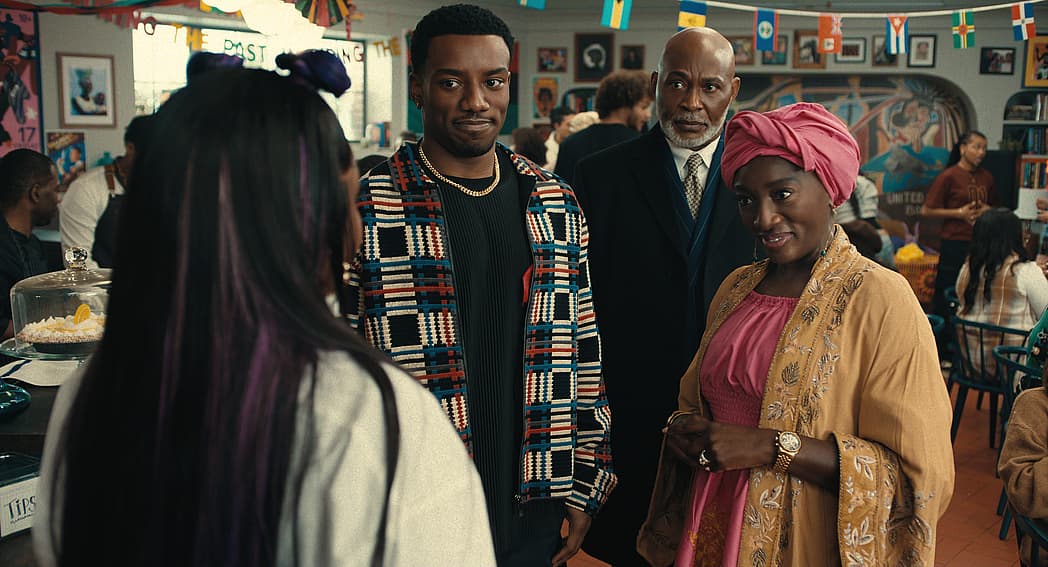
One of my favorite stories, and I love how showrunner Felicia Pride handled this, is the Black diaspora through Kojo. He comes in studying engineering to appease his African parents, but he really wants to be a fashion designer. I researched Ghana and Nigeria, and what it meant for him to be British, too. You see that in his designs and in his mother. She asks why he’s wasting their money, but look at how she dresses. She’s so regal, so beautiful. He’s inspired by her. Virgil Abloh was my inspiration for Kojo: someone of African descent, with African parents, who is also American. Our story goes beyond Black American culture, which is huge and is the heart of the HBCU. You’ll find all of us there: Caribbean, Black American, African.
With Amir, I wanted to show that the LGBTQ+ community is not a monolith. He has straight male friends who support him, love him and are his wingmen without judging him. One day, he’s in Timbs and baggy jeans. The next, he’s in a sheer, chest-out shirt, because that’s what he wants to wear. He’s free to live. He’s part of that community, but it doesn’t erase his personality. He’s also going through hard times that anyone can relate to.
I hope the audience finds a little of themselves in every character: in Rashida, in Deborah, in the originals, in our African brothers, and in Shaquille and what it means for a star athlete to choose an HBCU over a PWI, like what Deion Sanders built at Jackson State. Those are real stories. It’s the page first, story first, that motivates my design.
That’s the difference between styling and costume design. There’s nothing wrong with styling. That’s how I started. But what I do, what Ruth E. Carter, Frank Fleming, and Michelle Cole do, and those are Black costume designers in my guild, is tell stories through costume design as heads of departments. It’s a team effort, and I want to shout out my team, because I have the best costume department in the world, and they’re Black and brown, which is very rare. You only find that in abundance in Atlanta, and I make sure I bring my people in.
Whitley Gilbert is one of the most iconic dressers in TV history. What was it like styling Jasmine Guy’s Whitley at this stage of her life?
I was nervous. She was nervous. She has aged so gracefully, and this is one of the biggest, most legendary characters in Black television, in television, period. I wanted to handle it with care and with excellence. I wanted her so grounded, stable and fly that no matter what, she could stand. I wanted to protect her and honor her through costume design.
Even the gala dress: I didn’t just want to put her in a gown. I wanted a certain color and a certain structure, so that when she walked, she felt, “I’m Whitley Gilbert, and I did this.” There were pieces she said she’d never wear, and then she’d put them on and couldn’t believe it. She felt so confident and energized. As a costume designer, when you see your talent feel like that, that’s how you know you have it.
We laughed, we cried, we embraced. The process was healing. I could see her light glowing and her confidence rising. It wasn’t just a fitting. This is Whitley. We had her furs, a great handbag, everything top tier. She didn’t want the traditional Chanel suit or that St. John look, which is usually the go-to. She called those “soup coolers” or “oven mitts.” So I listened to her, I was patient and I honored her. She’s our elder and our legacy.
When I get to work with people I honor in my own community, like Debbie and Jasmine, I want them to feel elevated. I hope the audience sees that there’s intention behind this design. It’s not just cool stuff. There’s a lot of messaging and a lot of elevation.
The show is full of Easter eggs. What’s one wardrobe detail you loved that audiences may have missed?
I don’t know if people caught the vintage mink reference. In the original, Freddie knocks on Whitley’s door and asks if she wants to go to breakfast. Whitley says, “One second,” takes off her robe, throws on a vintage mink coat and her glasses, and walks out. We do that with Deborah.
People did catch the Bulls reference with the Coogi shorts. That was an exact reference to Dwayne. The Colonel wears combat boots with his suit. That was intentional, and personal: my father is ex-military, and he wears his military boots with his suits. The frog closures on the sorority looks are another one. There are a lot.
But the one I haven’t seen anybody catch is Kim. Remember when Whitley and Kim had that fight, and Kim is like, “Come on, you scared of me?” Kim is wearing a beautiful multicolored sweater. I did a multicolored dress as an ode to that sweater. Look up the original scene, then look at the dress. That’s a Kimberly reference.
There were Black-owned brands and designers sprinkled throughout the show. Can you tell us some of the brands in the show?
We led with Black designers all the way on this one. Some of the designers include:
What do you hope a young viewer, maybe someone deciding on an HBCU right now, takes away from the show?
I hope young people are inspired. I hope they understand why HBCUs are so important. They elevate our community. It’s for us, by us, and what better way to do that than through education? It’s a community where you elevate each other, and when you go off into your careers, you still have that community. There’s nothing like that sense of community, the traditions, the camaraderie, the education and the exposure. I hope this inspires people and increases applications and enrollment at HBCUs everywhere.
And from a style perspective, what do you hope young people take away from all these different looks?
Style is not labels. You can do high and low. You can do vintage. I say from Bankhead to Buckhead: I’m at Goodwill, the beauty supply, Neiman Marcus, Saks Fifth Avenue, and I’m in your mama’s closet. I’m everywhere. So you’ll see Marni, then a vintage T-shirt, then Gucci, then Chanel, then a Black creative. It’s a mix, because it’s more about fit and fabric than labels. Labels are fun, and they tell you what structure and fabric to expect from a house. But when it comes to style, don’t be afraid to go everywhere and do what works for you. Maybe seeing what Kojo is doing with Chop Lyfe inspires you to start a line. Maybe you’re a church girl who wants a little edge. You don’t have to be rich to have style, especially in college. You make it do what it do. Like we say at CAU: find a way or make one.