America officially has a new Black medical school.
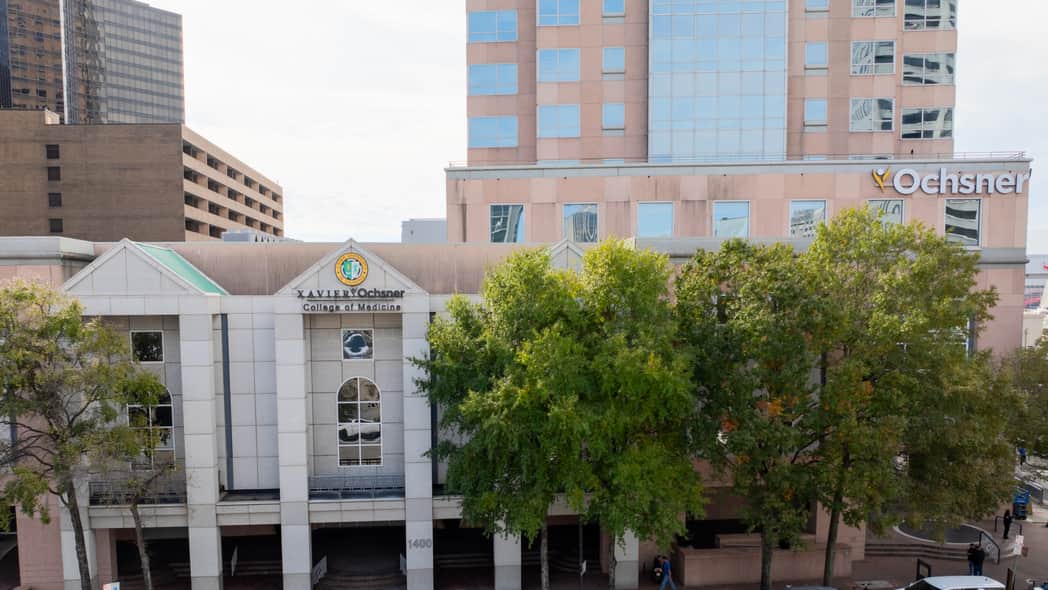
On Wednesday, Oct. 14, Xavier Ochsner College of Medicine announced it has been awarded preliminary accreditation, becoming the only HBCU college of medicine in the Gulf South and the fifth HBCU medical school to date.
Dr. Reynold Verret, president of Xavier University of Louisiana, called the moment “historic” in a release.
When speaking to theGrio earlier this week, he noted that there has not been another allopathic medical school founded at an HBCU since Morehouse School of Medicine, which was originally launched in 1975 before becoming fully independent in 1981.
“There’s been a deficit of African American doctors,” he continued. “So it’s very significant that we are contributing to the representation of people, the diversity of America in the clinics who make decisions, who actually define the criteria of care, who look at the needs of different populations, so that we can serve all Americans.”
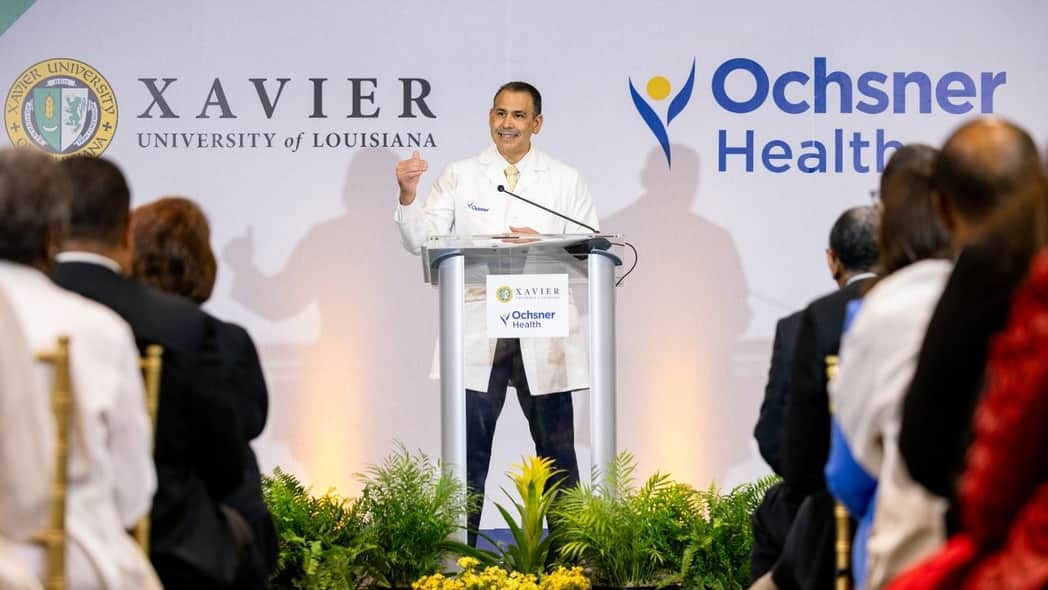
Meanwhile, Dr. Leonardo Seoane, president and founding dean of Xavier Ochsner College of Medicine, said the word that keeps getting thrown around is “transformational.”
“This really is transformational. It’s transformational for Xavier and its 100-year legacy to finally have its own college of medicine. It’s transformational for the health system,” he said. “And it’s transformational for the city of New Orleans and Gulf South.”



He went on to explain that much of the talent, including Black and brown talent, is already right there in the region’s elementary schools, middle schools and high schools.
“We are big believers of ‘you’ve got to see it to be it,’” he continued. “So to have a college of medicine with Xavier’s legacy, that says ‘we welcome you, we want you, we’re invested in you,’ I think that just means the world for these communities that we serve.”
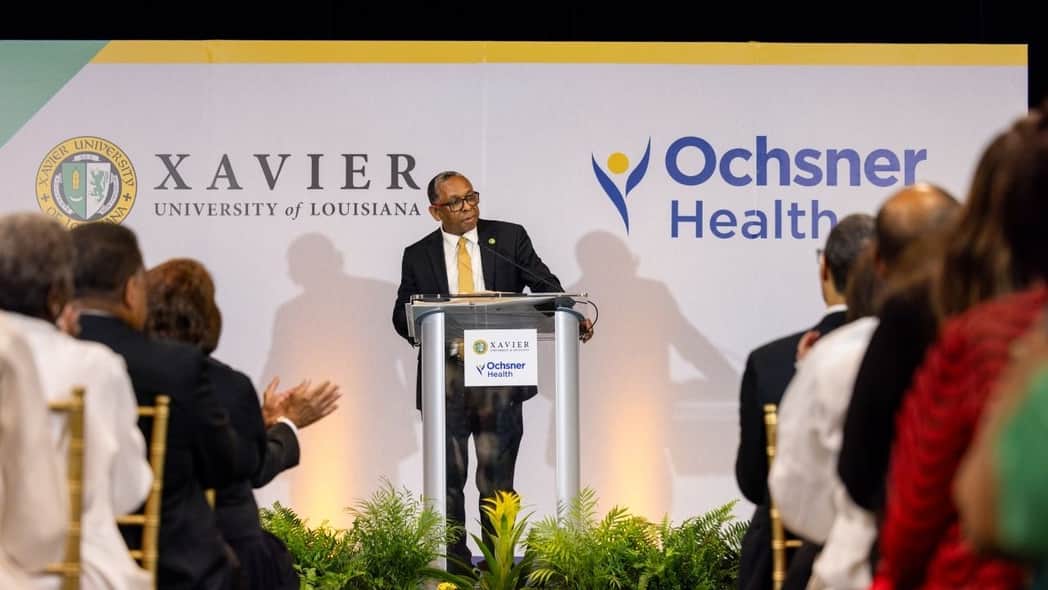
With plans to begin recruiting its inaugural class of medical students for 2027, the new college, established through a partnership between Xavier University and Ochsner Health, couldn’t come at a more critical time. Black physicians currently make up just 5.3% of active doctors in the United States, according to the Association of American Medical Colleges (AAMC), amid a growing nationwide physician shortage. Xavier, already a leading institution in preparing Black students for medical school, will now be able to train future physicians at its own college of medicine.
The AAMC has also been sounding the alarm that the United States could face a shortage of up to 86,000 physicians by 2036, a crisis already being felt across the country, from rural communities where access to medical care can be limited to urban areas where patients may struggle to find specialists or face lengthy wait times for appointments. Seoane noted that while the shortage is growing, it often doesn’t receive the attention it deserves until people experience it firsthand.
“People don’t talk about it until you have a friend or a family member who needs a pulmonologist or a rheumatologist, and you know, oh, it’s a six-month wait or a nine-month wait, and then that crisis becomes real,” he said.
He added, “More doctors for the United States really helps address that physician workforce crisis.”
Meanwhile, the shortage of Black physicians is a longstanding issue rooted in generations of unequal access to medical education. Five of the seven medical schools originally established to educate Black students were forced to close in the wake of the 1910 Flexner Report, leaving Howard University and Meharry Medical College as the only two remaining. More than a century later, financial barriers continue to make the path to medicine especially difficult for Black students. AAMC data from the 2018-2019 academic year found that 40.5% of Black students entering medical school already carried at least $25,000 in educational debt, before even beginning the costly process of earning their medical degrees.
This barrier is showing in the student breakdowns. In the 2024-2025 academic year, the number of Black students entering U.S. medical schools declined by 11.6%, marking the third consecutive year of declines. With the cost of medical school remaining a major hurdle for aspiring physicians, Xavier is already considering how to make its new program more affordable. As officials continue to put their heads together, Seoane said they’re also using opportunities to spread the word that, as the school begins accepting student applications, it’s welcoming support from organizations and individuals inspired by its mission.
In the meantime, the school has taken some concrete steps, including deliberately setting its tuition 19% lower than the average tuition at private U.S. medical schools. Another major pathway is through a partnership called Ochsner Scholars, which will cover four years of tuition for Xavier Ochsner College of Medicine students who commit to careers in primary care or psychiatry (two areas facing urgent shortages) and agree to work within the Ochsner Health system for five years.
“So we’re thinking creatively about how we address that financial burden, but certainly scholarships are the key,” he explained.
While the new college stands to make a significant difference in the future of medicine, Verret believes its impact could extend well beyond the doctors it trains and the patients they eventually serve.
“We have always educated students at the highest level, who are competitive wherever they go in medical school, law school, whatever,” he said. “And here you’ll have graduates in medicine who will actually not only be clinicians but will help shape the future of medicine. So it will be contributing to a more just, humane society, which is the mission that never changes.”
He added, “Their impact will be not just on the patients that they begin to serve, but also on the imagination of the larger community.”