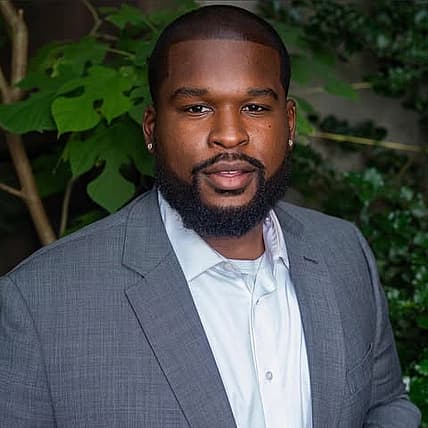
For the last three weeks, Nolan Wells’ name has been everywhere. From social media timelines to news headlines, the mystery of what happened to the 18-year-old, whose body was found on Mississippi’s Horn Island after a July 4 boating trip, has been on everyone’s mind. And while the spotlight on a case involving a Black boy has been refreshing to see, the attention has arrived with waves of misinformation, speculation, and narratives that appear to be doing more harm than good.
This week, after the Mississippi Department of Marine Resources (MDMR) released audio from a call believed to be linked to the case, reports from outlets like ABC News and TMZ surfaced claiming that the teen had been “drinking heavily.” Yet Mississippi authorities have not released Wells’ official autopsy and toxicology reports, prompting many social media users to call out a pattern of bias they say runs through mainstream media.
View on Threads
View on Threads
View on Threads
More storiesView on Threads
View on Threads
“I see a lot of media outlets suddenly spreading a narrative that Nolan Wells had been drinking heavily on the day of his death. Nolan Wells was 18 years old,” one Threads user wrote. “So no matter which way you spin it, there is someone who needs to be held accountable. If he was underage and being supplied alcohol, who supplied it? Which adult provided it? Arrest them.”
In an interview with theGrio, journalist, author, and former “Good Morning America” anchor Janai Norman echoed those sentiments from a media perspective. “It’s just a glaring example of how traditional news media will denigrate the dead when they are Black. We have seen this before, and this is just the latest example of it. And I think that is why so many people are paying attention to it, because they can see very clearly that Nolan Wells is not here to defend himself. Yet, in the news coverage, we have seen the coverage take the side of what, in most cases, I think most people would view as suspects, and that’s what’s been disheartening.”
“I think for so many people, and it has nothing to do with race, actually, because anyone, any parent who would have their kid leave home and not return home would want to know what happened, would want to have answers, would want a thorough investigation, and would hope that the news media would cover the story as the fourth estate, as an independent fourth estate that is there to verify information before just putting it out, and unfortunately, that doesn’t seem to be what’s happened here,” she added.
The witness’s claims about drinking weren’t the first premature conclusions to surface. On July 6, after the missing teen’s body was found, local officials said it appeared to be an accidental drowning, and Jackson County Coroner Bruce Lynd told reporters there were “no immediate, obvious signs of foul play or trauma” before an autopsy had even taken place
“Narrative matters in this case,” NAACP president Derek Johnson said as previously reported by theGrio. “And we’re saying that in Nolan Wells’ situation, the narrative should not be that it was an accident before there was an investigation. The narrative should not be the words of individuals who went on a boat to the island with him, but they came home without him, but with his cell phone.”
Norman was blunt about the root of it. “This is racism,” she said plainly. “We need to stop gaslighting ourselves and call it what it is. There should not be a headline alleging that Nolan Wells was or wasn’t heavily intoxicated. That shouldn’t be happening. And if he weren’t Black, I’m not sure that it would be.”
She also pointed to the mass layoffs across media organizations, which have arguably hit Black employees hardest, as another layer of what social media users have been flagging.
“You reached out to me for my expertise on this story about a headline from an organization that decided in the last four months that they were better off without my expertise, and now we’re seeing what a poor business decision that was. Why was that decision made? I don’t know. But it’s the same reason we keep seeing these things happen,” she noted.
“Literacy in this country is awful. Media literacy in this country is even worse because people aren’t learning it. And when there is so much information out there, and we’re getting information from so many different places, that is dangerous,” she said, noting how the industry shift has even the most highly educated groups of people rethinking who and what they consider to be a “credible source.”
“That’s the point people are getting to. It is making us reconfigure what is reputable, and that’s exactly where we are at this point. We’ve gotten to the point where the president has yelled fake news so loud, but we’ve seen the deficits of traditional news media that now we really do have to decide what are the reputable news organizations, what are the reputable sites, and maybe they aren’t the same as they had been in the past.”
So for readers, trying to avoid media bias in the news intake, Norman says the first step is to “be mindful of how white supremacy shows up in reporting,” one she also encourages journalists to reflect on.
“We need to be honest about the fact that white supremacy shows up in all different facets of our lives, in every facet of our lives, and news media and reporting are no exception. And the sooner that we accept that, then the better that we can see through it,” Norman explained. “Because once you name a pattern it’s tough to unsee it. So we have to name it so when you are seeing news coverage, you are reading it, and you are listening to it—it pings. You hear it. You recognize it.”
And through her “Media Literacy” series, she aims to bring attention to how white supremacy and manipulation play a role in media, so people can wake up to it, be aware of it, name the pattern, recognize it, and then be able to move through the world, seeing it for what it is. Because ultimately, as a Black woman, she understands that “we as Black Americans have always had to rely on ourselves when it came to telling the truth about our stories, to telling our stories with dignity, to telling our stories with humanity, to telling our stories with love, with respect. We’ve always had to rely on ourselves. 2026 is no different.”