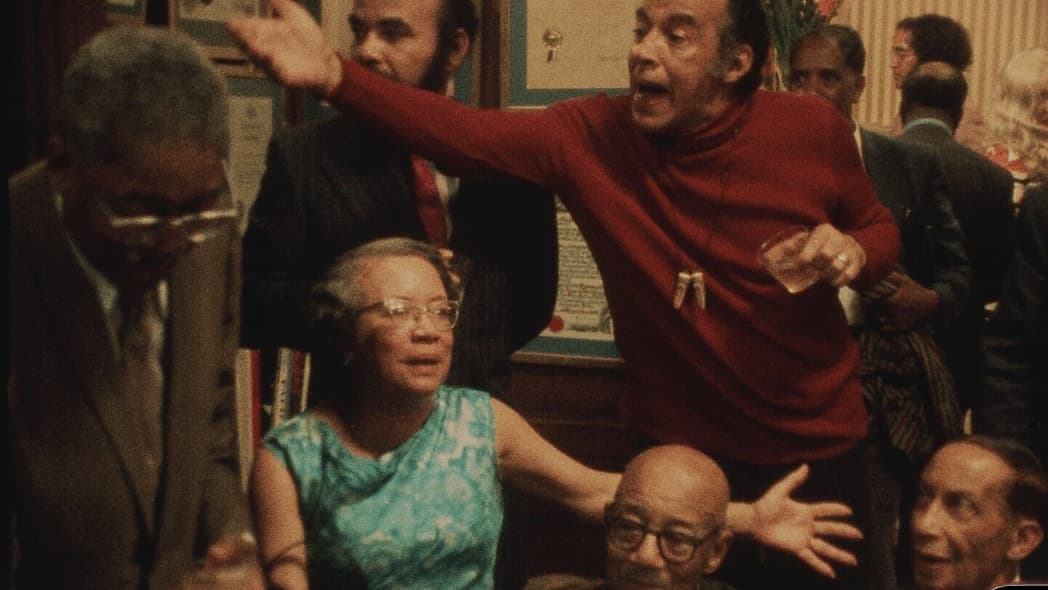
On a warm August afternoon in Harlem, New York, in 1972, a cocktail party took place at Duke Ellington’s home. Not just any cocktail party but one filled with Black painters, poets, writers, musicians, and other luminaries who, more than five decades earlier, gave birth to the Harlem Renaissance. And we almost never saw the footage.
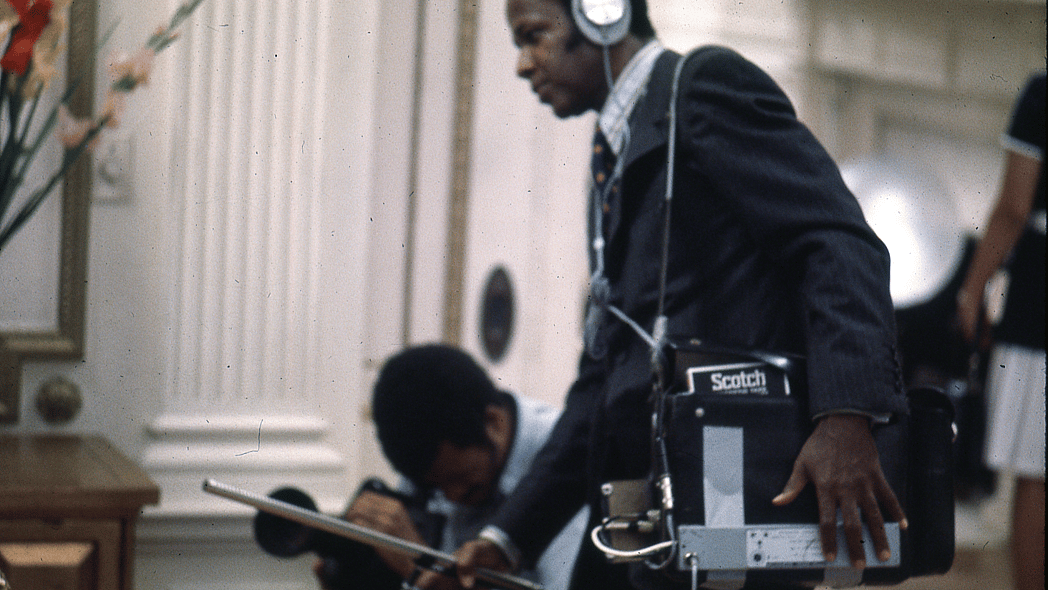
The new documentary, “Once Upon a Time in Harlem,” which captures that afternoon in real time, was shot by the late filmmaker William Greaves and his crew, including his then-26-year-old son, David. More than 50 years later, the documentary, finished by David and produced by his daughter Liani Greaves, is finally arriving in theaters next month.
“We think about this film as like a recipe for an awakening,” Liani told theGrio over Zoom during a recent interview joined by David.
Shot on 16mm film in cinema verité style and featuring rare appearances by Eubie Blake, Richard Bruce Nugent, Ida Mae Cullen (the widow of Countee Cullen), journalist and society writer Gerri Major, photographer James Van Der Zee, and more, the documentary has been a labor of love. Greaves struggled to find the right shape for the project before moving on to other work, leaving the footage unfinished for decades. Now, David and Liani are excited for the world to finally see what was captured that day.
“What [Greaves] wanted to do was bring together these folks who had been a major influence on his life and on the artistic development of America, and he knew that if it was not recorded, that whole time would be lost,” David recalled. “You know, you’d only see it in pictures and read about in books, and you wouldn’t get the depth of the people who really made it up. So here he was able to record the, if you will, the primary sources of history.”
The Harlem Renaissance ushered in an explosion of Black art, literature, music, and intellectual thought throughout the 1920s and into the 1930s, much of it centered in the New York neighborhood that gave the era its name. By 1972, some of its most famous figures, including Langston Hughes, Zora Neale Hurston, and Cullen, had died, making the opportunity to gather so many of their surviving peers in one room increasingly rare.
Greaves “felt that it was the most important footage that he had ever recorded,” David said.
“Because these were folks who created a time and an environment that really was rife with creativity and in a time that was really a chaotic time racially in America,” he continued. “You know, a dangerous time, and he felt that people should know that even in that moment, they were doing some incredibly creative things, and he did not want that lost.”
As the film opens, one by one, the guests arrive in their 1970s Sunday best, and are served a pale orange drink that looks incredibly refreshing, and settle in to reminisce. They respectfully argue, old rivals bump shoulders and speak of friends who were no longer there, including Hurston, with the reverence of legends and familiarity of people they actually knew.
They’re also hilarious. Blake is sharp-witted, while Major, sitting there wearing a pair of massive, thick black-framed glasses, thick gold chains, and vibrant colors, is effortlessly stylish. Everyone is also remarkably down to Earth. At times, watching them talk feels like eavesdropping on the adults as they discuss grown folks’ business.


“I think it was important for people to see relationships, to see people agreeing, disagreeing, people that care about each other, and what that looks like,” Liani expressed.
“They respect each other,” she continued. “As George Schuyler says in the film, ‘this is a sign of a civilized society.’ This is what a civilized society looks like. Healthy conversation. Disagreements and all of it to recognize yourself in it, too.”
Some of what they’re debating could easily be overheard in a room full of Black creatives today, from what Black people should call themselves and how they should be portrayed to the responsibility of Black media to put forth positive images of Black life.
There is something equally striking about seeing just how interconnected they really were. The people in that room give the sense that they really were this close-knit cohort of creatives working together to write novels, compose music, perform in musicals, create art, take photographs, and document Black life through journalism while navigating Jim Crow, racial violence, and widespread discrimination.
“What struck me was their interest in each other and their ability to remember the time,” David noted.
It is truly wild to watch an 85-year-old Blake holding court and rattling off whole moments from decades earlier with incredible clarity. His memory, along with that of the others gathered, also helps reveal just how many people, beyond the Harlem Renaissance’s rock stars, played a role in shaping the era into what it became.
“What struck me the most was just the more I watch the film, I start to understand myself a little bit more—about these artists and the people, the roles that everybody played,” Liani explained.
“When I look at women like Louise Patterson or Regina Andrews and Gerri Major, and I think about the roles that they played during that time, it causes me to kind of reflect a bit more on myself,” she continued.
But don’t worry if you find yourself feeling like you’re failing a history test, wondering who any of these luminaries are at first—you wouldn’t be alone.
The producer added that among her reflections was also,, “how much I didn’t know about the Renaissance?”
“The first pass through was like, ‘who are these people?’ You know, and also why they are important, right?’” she admitted with a laugh. “You start to understand that in the film, and why they are important now.”
David hopes viewers come away understanding what they managed to create despite the world around them.
“While all that was going on, there were also these gatherings of intellectual talent that was just being incubated,” he said.
There’s also a lesson in the power of being present for the moment you’re living in. The artists who made up the Harlem Renaissance didn’t know they were living through a movement that would still be studied a century later. They were busy writing, painting, performing, photographing, documenting, and building community. Liani sees that as a reason to pay attention to what could be happening around us now, and what Black creatives making art and building community today could be in the midst of creating.
“Because right now we are making history, we are creating a legacy,” Liani said, adding that folks shouldn’t wait around for the next major artistic movement. “And having those kinds of conversations about what is next. It is the now.”
“Once Upon A Time In Harlem” is arriving for a limited release in select theaters beginning October 16.