Nearly $300 million is currently being held up by the Trump administration amid a legal battle over the release of congressionally approved funds to community development financial institutions (CDFIs), which provide critical capital for Black businesses.
In a lawsuit filed last week in the United States District Court for the District of Columbia, a coalition of justice and sustainability investors sought a temporary restraining order and a preliminary injunction against the Treasury Department and Community Development Financial Institution Fund after the agencies failed to distribute $289 million to community institutions before the funds fiscally expire on Sept. 30.
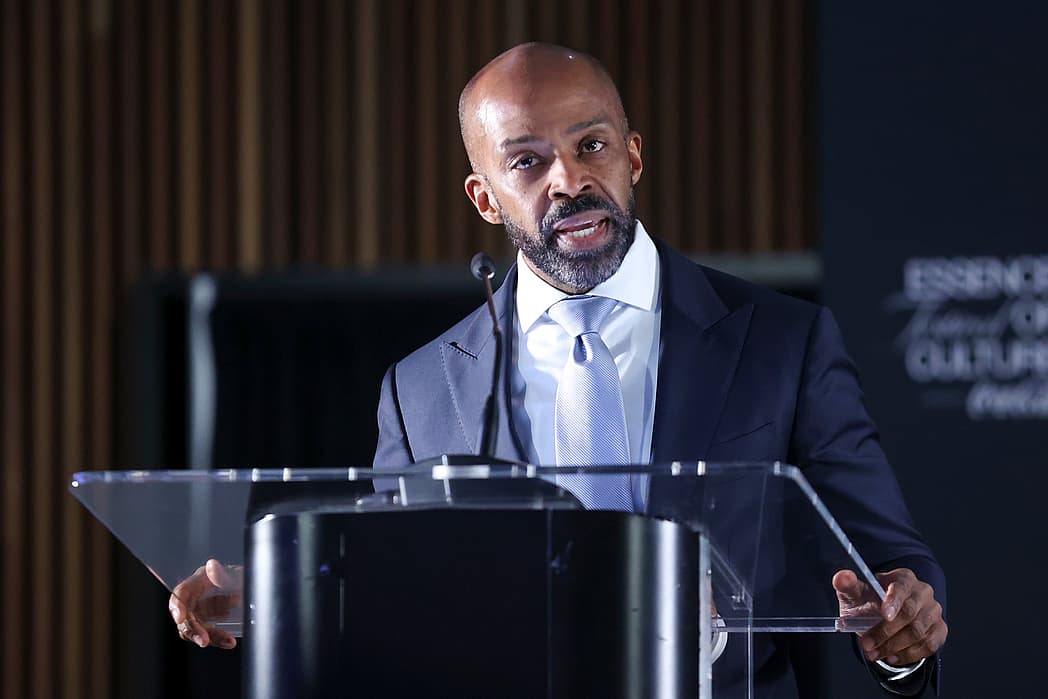
“The community funding that we’re fighting for here really goes to the heart of marginalized communities,” Alphonso David, the lead counsel for Freedom Economy Business Association, told theGrio after a court hearing on Monday.
Established in 1994, the Community Development Financial Institution Fund was established by Congress to promote economic revitalization in distressed communities throughout the United States. Many Black businesses over-index in capital received by CDFIs in their communities because traditional banks systematically reject minority enterprises at much higher rates, forcing them to rely on community-based or mission-driven lenders.
The lawsuit states that after a series of court filings in which the federal government claimed the funds in question have been obligated, plaintiffs remain concerned that no names of award recipients or information about the assistance agreements have been publicly disclosed, as has been done in years since 2019.
“Because we’re facing a deadline in two and a half days, we wanted to ensure that these funds would be obligated, and there was no instance in which the government could claim that these funds had lapsed,” explained David, who is president and CEO of The Global Black Economic Forum.



The attorney told theGrio that he is particularly concerned by the actions of the Trump administration because in years past, CDFI funding for Black and minority communities has received bipartisan support.
“They understand that if you want to open up a business and you may not have all of the requirements that a traditional lending institution is asking for, you can get funding from a CDFI,” he noted.
David says that, as a result of the funding not being distributed, businesses and organizations have had to lay off staff, exhaust letters of credit, and accrue additional debt.
“They’re losing millions of dollars in lending capacity, and they’ve had to discontinue programs for communities,” he shared. “This effort to ensure that the funding is actually allocated is core and central to women of color, to people of color, to marginalized communities that are all contributing to our economy.”
The financial hit to enterprises that rely on CDFIs comes as Black and minority-owned businesses struggle to navigate President Donald Trump’s tariff policies and the war in Iran. The foreign and trade policies have disrupted supply chains, driving up costs for owners, who are passing them on to consumers.
Tynesia Boyea-Robinson, board chair of Freedom Economy Business Association, told theGrio that in addition to the harm to businesses, the community itself is also suffering.
“It goes to affordable housing. It goes to clinics. It goes to the neighborhood store that provides you with food because the big grocery store won’t come to your neighborhood,” said Boyea-Robinson. She said enterprises and organizations also “employ people who often are cut off from the mainstream.”
She added, “The ripple effects of these funds don’t just affect the institutions themselves; they affect the communities those dollars land in, and that’s everyday Americans who are already struggling to make ends meet for all the reasons you’ve already said.”
Freedom Economy also expressed concern about the Trump administration’s intent to implement new conditions for CDFI awardees under the guise of President Trump’s anti-DEI orders. David said such new conditions are not authorized by Congress.
“We understand that the administration may have a perspective on diversity, equity, and inclusion, but their perspective does not amount to what the law is,” he said during Monday’s press conference.
David told theGrio the group’s concern isn’t just about fiscal year 2025 funding, but future funding that will be equally critical for Black and minority businesses and the communities that rely on CDFIs.
“Our litigation focus is on the 2025 funding, but obviously we’re concerned about future funding as well. So we’re going to be prepared to see what the federal government does here,” David told theGrio. “Obviously, they’re likely going to use 2025 as a test balloon to see what they can do. So we’re litigating the 2025 funding, but we’re also focused on 2026.”