As national Democrats process the fallout of the Democratic National Committee’s “autopsy” report released Thursday, Black Democratic strategists say that the report — intended to explain why Kamala Harris lost the 2024 presidential election to President Donald Trump — somewhat vindicates the former U.S. Vice President and exposes a party sin by not adequately investing in a Black infrastructure to win elections.
Most Democrats agree that the “autopsy” report does little to help the party better understand the 2024 election outcome and merely regurgitates already known truths about the party’s organizational failures. One of those truths is how wholly unprepared the White House and the Biden-turned-Harris presidential campaign were in positioning Harris, and thereby the party, for success.
The vindication of Kamala Harris?
“The White House did not position or prepare the Vice President. Had the White House explored and evaluated ways to leverage Kamala Harris earlier in the administration, perhaps it would have improved the President’s standing, and it certainly could have helped prepare her to lead the ticket,” reads the report, authored by Democratic strategist Paul Rivera.
The report notes that the Biden administration failed to defend Harris, faced with political jabs by Republicans, who, for example, inaccurately labeled her the White House’s “border czar,” when she in fact was tasked with addressing irregular migration from Central America. The White House also failed to conduct research on Harris to “identify the issues she should talk about, the ways in which she should talk about them, the audiences with which she could perhaps resonate and support the President’s agenda.”
Harris made similar critiques in her book “107 Days,” which details her historically short presidential campaign after former President Joe Biden ended his re-election bid amid controversy over his age and capacity to win the election and serve a second term.
“I think she is vindicated in it,” said Ashley Etienne, a former communications director for Vice President Harris and former House Speaker Nancy Pelosi. The Democratic strategist tells theGrio, “It’s another insult to Black people, the way that she was treated, but…the way that she was treated is emblematic of how the party treats Black people in general.”
Etienne continued, “I think it’s an all-out indifference, and to some degree, a level of resentment toward Black people, and that…was reflected in how they treated Kamala Harris from the White House to the campaign, and it’s reflected in the fact that they don’t bring us to the table to share in the power and the resources of this party.”
As an HBCU graduate and member of the nation’s oldest Black sorority, Harris had strong support within the Black community; however, Democratic strategist Joel Payne tells theGrio, “Ultimately, this talented Black woman was going to be handed an unplayable hand and going to be blamed disproportionately if it didn’t work out.”
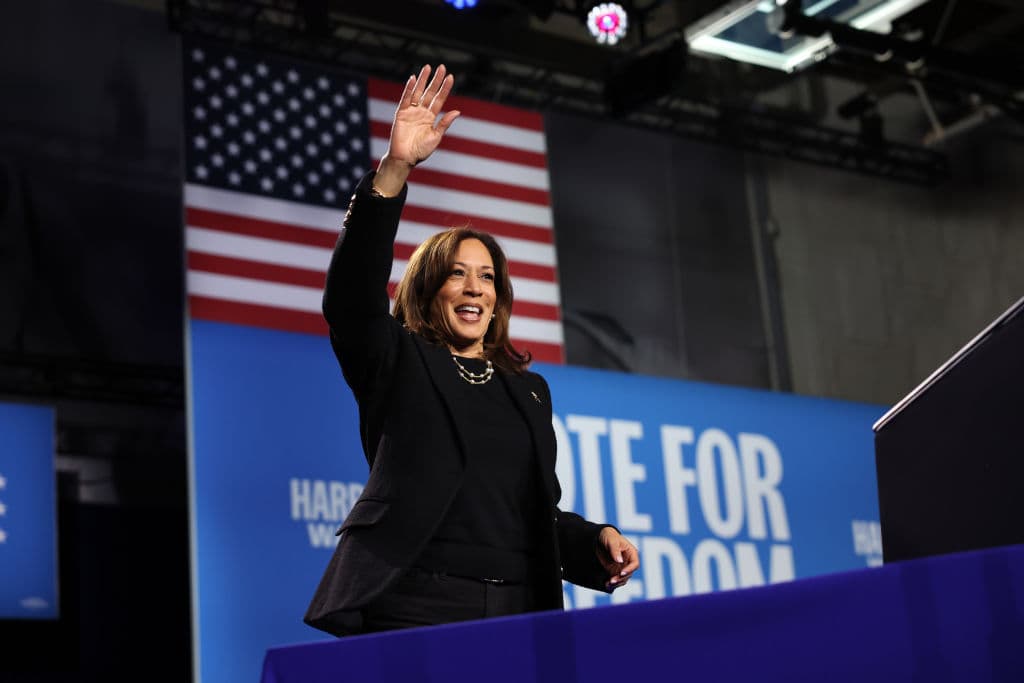
Payne added, “There were institutional barriers that prevented Harris from overcoming the lack of trust and the lack of connection to voters. There were tactical and strategic errors that were made… it is not Kamala Harris specific.”
Antjuan Seawright, a Democratic strategist who advises national Democrats like U.S. House Democratic Leader U.S. Rep. Hakeem Jeffries and Assistant Democratic Leader Rep. Joe Neguse, says that rather than blame the White House as a monolith, specific individuals in Biden’s orbit should be called out.
“I think that there were a lot of mistakes made, and I don’t think you can blame Kamala or Joe Biden,” he tells theGrio.
However, Michael Hardaway, a Democratic strategist who served as senior advisor and communications director for Jeffries and worked on Barack Obama‘s 2008 presidential campaign, said, “I’ve always been of the opinion that if your name is on the door, whatever happens is your responsibility, good or bad. And she inherited Joe Biden’s team; those are the people they decided to hire. I don’t believe that she had to keep any people that she didn’t think were good.”
Hardaway tells theGrio that Democrats should have won the 2024 election, citing the billions of dollars raised and economic successes that were not effectively messaged to voters.
“Yes, prices were high, and yes, there was this asymmetric news cycle that focused on inflation every single day, even though inflation today is 3.8% and it was 2.6% on Election Day, and yes, all of that is true, but they had a real record to run on,” he said. “The Biden White House created 15 million plus jobs, 800,000 manufacturing jobs. Black business creation was at its highest level in history, but no one actually knew about those things.”
The Democratic Party’s “Black infrastructure” problem
What’s not mentioned in the report as it relates to the party’s investments in Black communities is most troubling, Black Democratic strategists tell theGrio.
During the 2024 presidential cycle, Democrats fretted over polling that showed that the party was bleeding support among its base of Black voters, namely Black men and young Black voters. While the DNC autopsy acknowledges there were “dramatic drops in support among young Black men” and admits that massive media investments were not matched by robust organizing, resulting in lower turnout, it failed to provide any details about how the party invested or did not invest in building a political infrastructure to mobilize disenchanted Black voters.
Ashley Etienne tells theGrio that Black strategists and operatives “don’t share in the power nor the resources” and that “decisions were made to line people’s pockets and not win an election.” Based on her own review of the billions of dollars spent, Etienne said she “couldn’t even find a Black firm that was listed” in the report’s financial breakdowns.
“Why give money to white firms to talk to Black people? Why keep putting money on television and not investing in Black media, where we know we actually are,” she lamented. “Why not do what Republicans are doing, which is invest in building a new infrastructure information ecosystem that includes Black influencers to turn out and engage Black voters?”
The autopsy acknowledges that the party waits too late and too long to spend its money, something Etienne emphasizes is a consistent failure regarding Black and Brown communities. She said the party engages Black voters at the “11th hour” in highly transactional ways, expecting them to turn out and save the party without having funded meaningful, two-way engagement earlier in the cycle.
Michael Hardaway said Black journalists and influencers like Roland Martin should have been “invested in by the campaign with real dollars,” telling theGrio, “I’m not talking a couple hundred thousand dollars when you raise a billion and a half dollars and you actually want Black people to come out. You should invest serious money into the people that are influential with Black voters in the places where Black voters go, and that didn’t appear to happen.”
Joel Payne, who served as a Black outreach director on the 2016 presidential campaign of Hillary Clinton, argued that Black voters, particularly Black men, were a “convenient scapegoat” to blame for Harris’ 2024 loss, rather than addressing the systemic failure to properly resource and engage them.
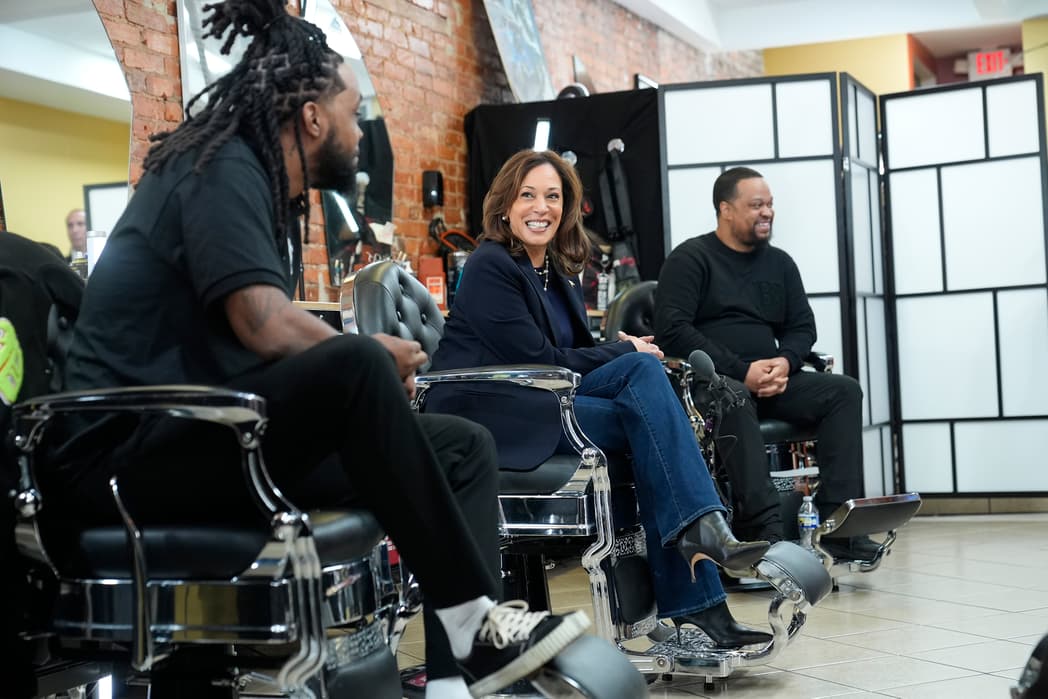
Still, Payne noted, “There’s obvious ample evidence now that Donald Trump’s marginal growth in some populations of Black voters, particularly Black men, was not the difference in this race.”
Antjuan Seawright argues that historically, the Democratic Party “wants our output but certainly does not want our input” when it comes to Black Americans. He states that the party has consistently failed to prioritize its most loyal and dedicated voting bloc, treating Black voters as an “expense” rather than a true “investment.”
“I certainly think that the Democratic Party owes it to its most loyal constituency, as Black voters, to invest more, spend more, and prioritize more across the board, and that includes having Black decision makers with budgets in the room and positions that don’t include political director and African-American outreach director,” said Seawright.
As Black communities disproportionately suffer under the second Trump administration and see their political power being wiped away across the South through racially gerrymandered maps following the Supreme Court’s gutting of the Voting Rights Act of 1965, the need to invest in a Black infrastructure could not be clearer, says Etienne.
“That’s why the party owes us an explanation because we’re bearing the brunt of the failures of the Democratic Party and decisions that were made, and then at the end of the day, we get blamed for it…enough is enough,” she told theGrio.
Ultimately, she said, recent comments by Kamala Harris that Black voters should be more “transactional” with their vote are spot on.
“We need to be as a people coalescing our power to ask these strategic questions,” said Etienne, who said she is convinced there is “some level of internalized racism” within the party.
“It’s not just a political party. It’s an eight-billion-dollar business that’s riding on our backs, and we need to demand investments that are smart and strategic and build Black political power,” she tells theGrio.
Ultimately, the release of the DNC’s so-called autopsy report was a “stupid decision” by DNC Chairman Ken Martin, said Hardaway, particularly as the country faces a “constitutional crisis” and the “most corrupt and morally bankrupt president in American history.”
“When you release such a report, it’s going to run the news cycle, and it’s going to be something people notice…he both decided to release the report, but also released a report that gave no information,” said Hardaway.
The Democratic strategist said it’s especially distracting amid a “bitter fight” over Black political power being “decimated” with the Supreme Court’s voting rights rollback and subsequent majority-Black districts being eliminated by Republicans in the South.
“It just doesn’t really make any sense,” said Hardaway.