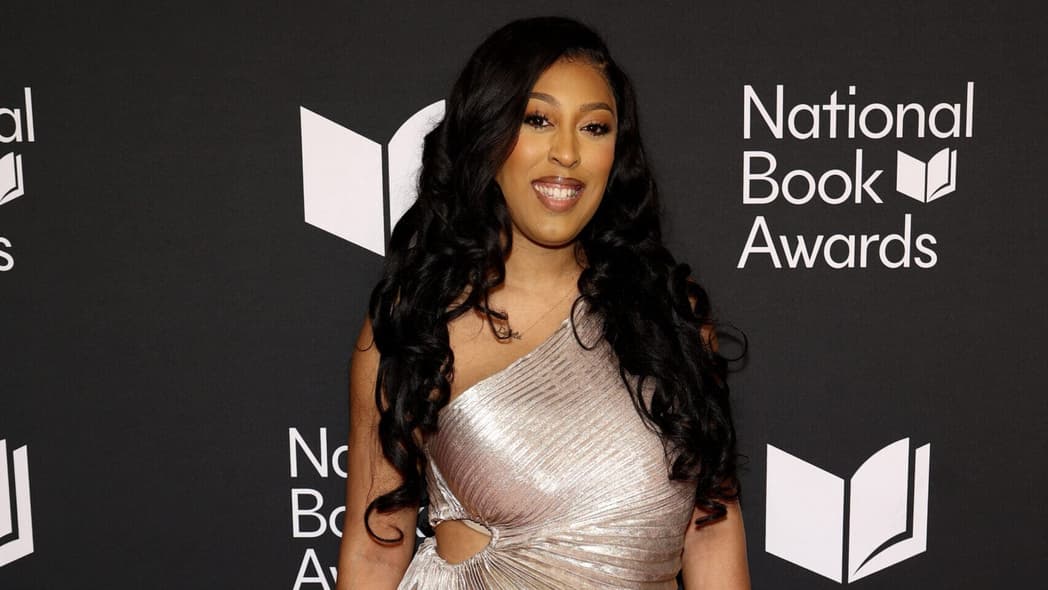
What started as a situation that left DMV-based YA author Lakita Wilson feeling powerless quickly turned into one that proved the strength of her community.
On Saturday, May 16, the author behind titles such as “Pretty Girl County,” “Last Chance Dance,” and “Be Real, Macy Weaver” prepared to appear at the Gaithersburg Book Festival when a mix-up nearly shut her out of the event.
After organizers had already billed her to appear, another author reportedly dropped out, triggering an error that removed Wilson’s name from the lineup.
“I found out the week of the festival while trying to get travel arrangements together. I was telling them, ‘No, that was a complete mistake. I would never drop out,’” Wilson told theGrio by phone on Thursday, May 21.
“Especially not something I had wanted to be part of for a really long time,” she continued. “At that moment, I had a choice to make. If you speak up about this, there could be backlash or consequences. But if I didn’t speak up for myself, I knew nothing would change.”
Unsure of what to do, the author took to social media in a post she admitted she never expected would garner as much attention as it did. The post quickly went viral, catching the attention of other writers like Tayari Jones, and ultimately prompted a phone call from the founder of the festival — Jud Ashman, the mayor of Gaithersburg himself — who personally asked her to still attend.
The Gaithersburg Book Festival did not immediately respond to theGrio’s request for comment.
Wilson opened up to theGrio about the experience, her latest YA novel, “Pretty Girl County,” and why community keeps her going.
This Q&A has been edited and condensed for clarity.
theGrio: “Pretty Girl County” is set in PG County — a very specific, very Black, very DMV world. What made you want to center that community in fiction, and what do you hope readers who’ve never set foot in Maryland take away from it?
Lakita Wilson: What really made me happy when I wrote was describing this place that I really felt very privileged to grow up in. I was born in Washington, D.C. My family is from Washington, D.C., but like many people from the nation’s capital, we migrated over to Prince George’s County. I’ve grown up around Black people my entire life where I was in the majority, but I didn’t realize what a privilege that was until I started traveling for work.
I didn’t really understand what a privilege it is to be in the majority and to see politicians and doctors and all of these people that look like you. When you grow up immersed with heroes that look like you, then you feel like there’s no limit to what you can do. But also I was seeing people who were choosing other paths too, and I didn’t have to box Black people into a category because we were everything.
That’s why the title of the novel was “Pretty Girl County,” because when I was growing up, Black girls would say, “Oh, we’re from Pretty Girl County.” We would always show that, like, “I see you when you’re shining.” That’s sort of a theme here. We are given the space to shine, and I wanted to show that. We have these communities that we build where we are really each other’s support system.
theGrio: Tell us more about what readers can expect from “Pretty Girl County”?
Wilson: This is pretty much the haves and have-nots of Prince George’s County, Maryland. I grew up in the wealthiest Black county in the United States, but I lived in the poorest city, and there was something about that. I always felt like I was straddling these worlds.
The story is about two girls that grew up in Seat Pleasant, Maryland, and they didn’t have a lot of money, but they’re best friends and they have the same kinds of dreams. Then one girl’s family comes into money and they move behind the gates in Bowie. She gets every material thing she’s ever wanted, and she still doesn’t get into her dream college.
The other girl wants to go to Spelman in the fall, but her family doesn’t have a lot of money, so she has to work all these after-school jobs and work in her dad’s indie bookstore to pay her way through school. Their friendship fractures because their lives have gone in two different directions, and they need each other to help each other get into school.
This was really my opportunity to highlight the Black community and how much value is in it — and HBCUs. There’s a lot of HBCU love in this book.
theGrio: Speaking of community, walk me through what happened at the Gaithersburg Book Festival and how your community, including other Black women writers like Tayari Jones, stepped in to help.
Wilson: I think it was a series of mistakes that just weren’t checked in time. This is my sixth book project, but I’m not the blockbuster author. I’m not the one where they’re sending me to the book event in a black car. When you are on the midlist, sometimes there’s no one else dreaming big for you. You have to dream big yourself.
This was the first year my publisher pitched me for the Gaithersburg Book Festival, and I was accepted. I had been looking forward to it for months. From what I understand, another author dropped out, and my name was mixed up. I accidentally was dropped out instead.
One thing I can say is that the community showed up for me in a huge way. Tayari Jones got in my inbox and said, “How can I help? What can I do?” Bigger authors in the industry were retweeting it and saying, “No, this has to be made right.”
And then the founder of the festival, the mayor of Gaithersburg, literally called me himself and said, “No, you come. You’re supposed to be here.” That meant everything to me. Sometimes you just need someone to say, “I care.”
I think this moment highlighted the haves and have-nots of publishing. When you have power, these things are able to be rectified a little bit faster. But when you don’t, sometimes you have to take a chance on yourself.
theGrio: That experience, and especially your phrasing it as the “haves and the have-nots of publishing,” seems to point to something bigger. What does the pipeline actually look like for Black women writing YA right now?
Wilson: Writing young adult contemporary — writing real-life stories — is very difficult right now for writers, especially marginalized writers. Talking about race right now is very difficult to sell. It’s very difficult to get marketing dollars for.
I feel like this is a time where we need representation more than ever, but when we don’t have a lot of Black women editors or Black women publishers who truly understand the need for these books, sometimes they just don’t get picked up.
And then when it comes time for marketing dollars, there are still conversations where people are like, “Well, do Black people really read?” If we don’t get a lot of marketing dollars, then we’re not going to be visible. I can do 3,000 TikTok dances, but that’s not going to equal a machine saying, “We are going to put all of our power behind you.”
A lot of things I did during the rollout for “Pretty Girl County,” I had to hustle and make connections on my own. I had to pitch myself to places to get my name out there and get the book in front of people.
There are so many critically acclaimed books that are really, really good books, and they just don’t have the marketing dollars or the support. If they don’t have the support, then it loses the support of bookstores, and we need the bookstores. It’s a pipeline that keeps hurting you.
But I do think community matters. When you have other authors, editors, and agents saying, “I don’t care how big the dream is, I’m still going to support you,” miracles happen every day.
theGrio: You posted recently about your editor being laid off — someone who had been with you through multiple books. You called it “a sucker punch.” How do you process losing that kind of relationship?
Wilson: I am taking it so personal because I just love her. She bought picture books from me, middle grade, young adult, nonfiction. She truly believed in me without anything. There was no sales record. There was nothing. It was just, “No, I love your writing, and we’re going to take this as far as we can take it.”
To have a champion like that is a game-changer for a writer. Working together for so long, we got to know each other so well. It became like a marriage in books. I trusted her with everything.
Regardless of marketing dollars or opportunities, those books were getting starred reviews. We were producing good work together. So to see someone in publishing work so hard and champion me in so many ways, and then have that taken away, it hurt. There is nothing like the relationship you establish with a longtime editor. I’ve been spoiled these last five years having the opportunity to work with her.
theGrio: Given all of that, what keeps you writing?
Wilson: I have a love-hate relationship with online discourse, because I think discourse is necessary. It allows a diverse selection of voices to be heard. But I also think we’re getting harmful takes.
I like to take all of those hot takes and fictionalize them. One of the things I’m working on now stems from the discourse around the value of Black women and who gets to decide someone’s value. Everybody has an opinion on Black women, but we should be able to assign our own value without all of these outside opinions.
I really enjoy putting all of these thoughts into fiction. I want to memorialize our thoughts and ideas as a community.
theGrio: So when a Black girl from PG County picks up “Pretty Girl County,” what do you hope she walks away feeling?
Wilson: I want a reader to pick the book up, read it, and walk away saying anything is possible, and the possibilities heighten when we support each other.
The closer we are in community, the more beauty we see, the more possibility we see, the more a dream becomes reality. Dream big. It’s possible. You’re going to get there, and have your community around you to support you as you go.