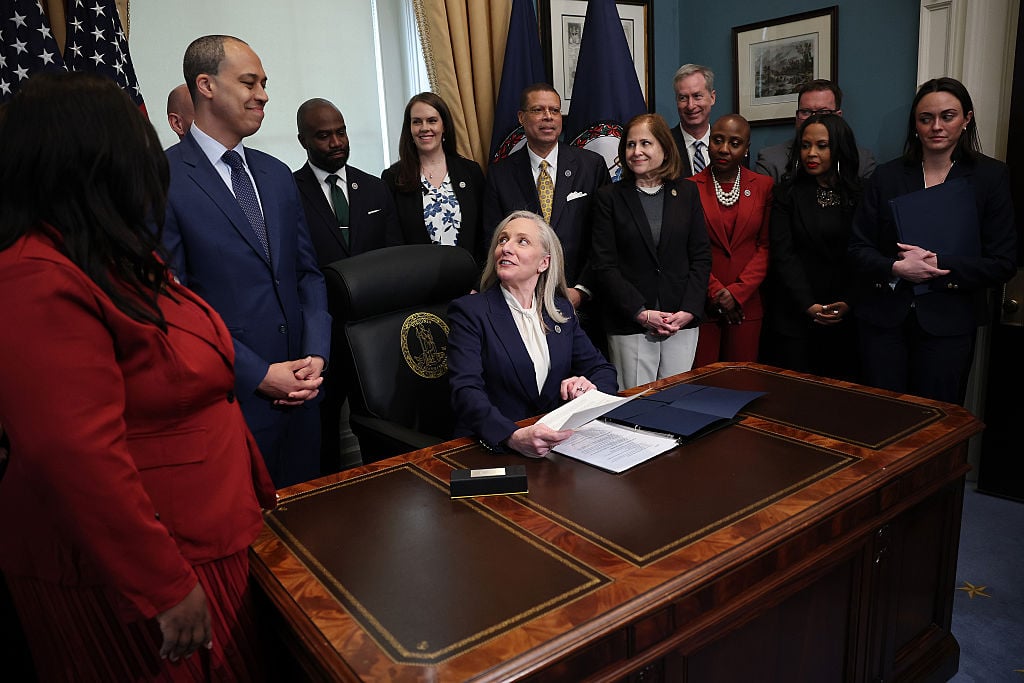
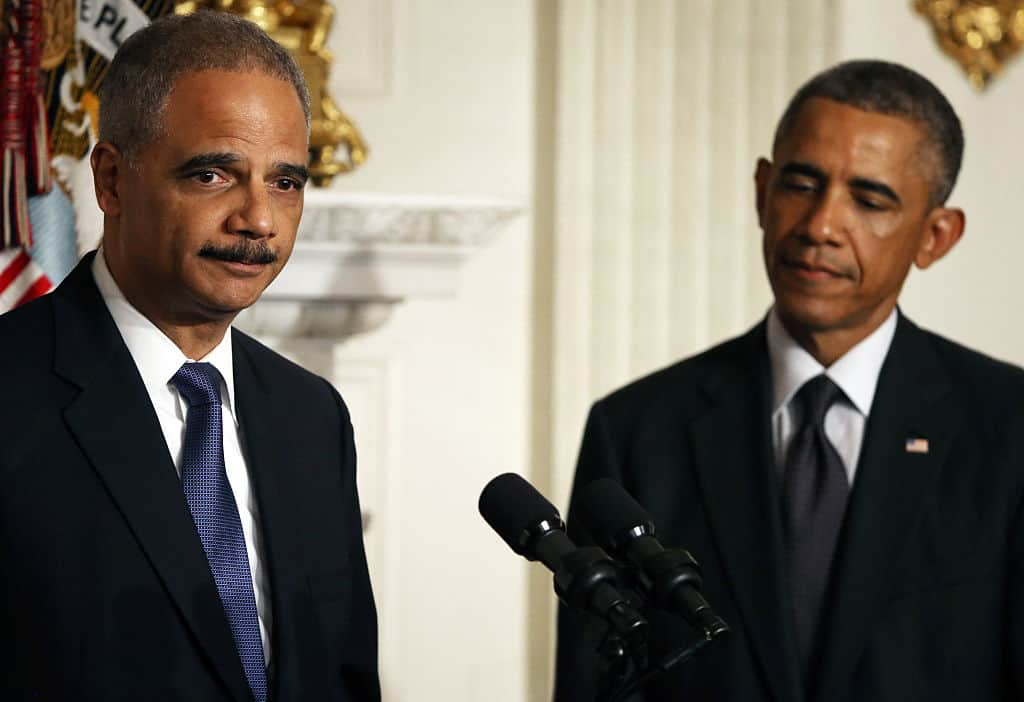
While history could be made in the closely watched gubernatorial race in Georgia, where Keisha Lance Bottoms is vying to become the state’s first Black governor and the first African-American woman elected governor in U.S. history, former United States Attorney General Eric Holder says there’s so much more on the line.
“I can’t emphasize this enough…the election of Keisha Lance Bottoms is critical to preventing a whole range of things that Republicans want to do, and among them is racial gerrymandering,” Holder told theGrio. “If a Republican legislature decides they want to racially gerrymander Georgia and Keisha Lance Bottoms is the governor, guess what she can do? She can veto.”
For years, the former Obama-era chief of the U.S. Department of Justice has been advocating against Republican state legislatures passing gerrymandered maps, which have significantly diluted the voting power of Black voters across the U.S. South.
In 2017, with the help of former President Barack Obama and former U.S. Speaker Nancy Pelosi, he founded the National Democratic Redistricting Committee. Holder and the NDRC have been fighting back against a wave of Republican-led states redrawing their congressional maps to benefit their party at the expense of Black and brown voters.




“People’s consciousness has been raised as they saw their political power being diminished, and then seeing what that meant,” Holder told theGrio.
Last year, President Donald Trump demanded that Republican state lawmakers redraw their maps ahead of November’s midterm elections to maintain party control of the U.S. Congress, at the expense of Black and brown voters. It was followed by the U.S. Supreme Court’s gutting of the Voting Rights Act of 1965 back in April, making it more difficult for Black voters to prove racial discrimination in voting.
While several states, including Texas, Louisiana, Alabama, and Tennessee, made the unprecedented move to redistrict mid-decade—meaning outside of the typical 10-year timeline tied to the U.S. Census—several other states controlled by Republicans, like Georgia, did not. Holder said that’s a result of the NDRC lobbying Republican state lawmakers against doing so.
“[We explained] if they did what Trump asked them to do, that it was gonna be a political consequence for them,” he shared. However, Holder warns that it doesn’t mean Georgia Republicans won’t try to gerrymander its maps ahead of the 2028 presidential election.
If Bottoms is elected governor, she will have the power to thwart GOP efforts to target districts with large Black populations. Holder says any political quagmire between a Republican legislature and a Democratic governor would lead to a bipartisan deal that produces “maps that are inherently more fair.”
“Having Keisha win in Georgia is really something that would be critical to making sure that not only the congressional map is fair, but the state legislative map is more fair,” said the former U.S. attorney general. But to make that happen, Black voters will have to turn out in large numbers in next week’s election.
“If you’re African American and not voting, you are dishonoring those people who committed themselves, who sacrificed, gave their lives so that we would have the ability to vote to an extent that they did not,” he told theGro. “If you don’t wanna dishonor those folks, if you wanna control the present, and that is the gerrymandering that Republicans would otherwise try to do, and if you wanna make for a better future, people need to vote.”
Holder said he is optimistic about the early turnout in Georgia.
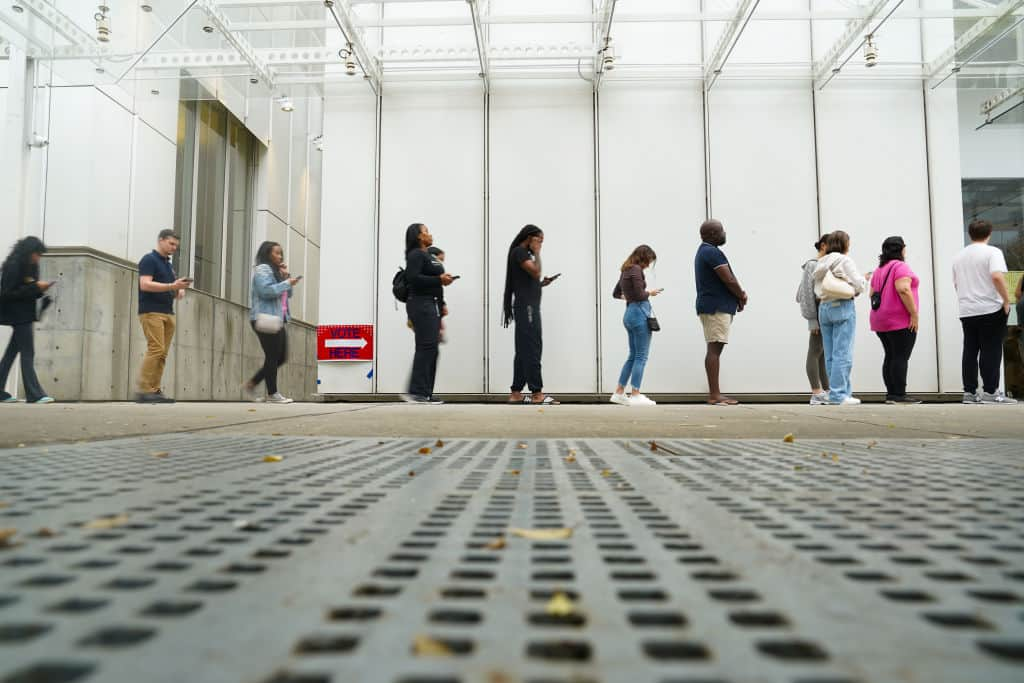
“The African American turnout there is just almost off the charts,” he said, referring to the record turnout in this midterm election with more than 2.2 million Georgians already casting their ballot. “A lot is going to be decided by one, two, three percentage points.”
In a plea to Black voters, Holder added, “If our community comes out in substantial numbers, we can be the component of the victory that makes things inherently more fair.”