All eyes are on Mississippi. Almost 24 hours after the polls closed for the 2026 midterm elections, with a majority of state election results announced, voters in Mississippi are anxiously awaiting the verdict in its Senate race. Democratic nominee Scott Colom and incumbent Senator Cindy Hyde-Smith are currently facing off in a tight race for the state’s Senate seat, with each holding 49.9% of the vote, per AP.
Though Colom reportedly has 462,857 votes, 65 more than Hyde-Smith (462,792), election officials have deemed the race too close to call as the state continues to count remaining ballots in several counties, including predominantly Black areas like Hinds County. Currently leading in the poll, Colom addressed voters this afternoon and said he’s confident in the projected outcome of the Mississippi Senate race while affirming efforts to ensure every vote is counted.
View on Threads
While the tight race is a testament to the saying “every vote matters,” what community leaders are seeing on the ground points to larger issues within Mississippi’s voting system. On election day, several counties in the state reported issues including voter registration verification and ballot scanner malfunctions. In a conversation with theGrio, Rukia Lumumba, a Mississippi resident and member of the Electoral Justice and Policy Department at the Movement for Black Lives Action Fund, shared insights into what organizers are seeing across Mississippi counties.
“On the ground, we’re seeing a win. In Mississippi, we’re seeing that Black folks showed up, showed out, and that we have shifted this state blue. And so, what we want is for our votes to be counted,” she told theGrio. “We are concerned about the growing reports of Black voter suppression during the midterms, and the primary issue has been the high number of Black voters that were challenged at the polls, despite their timely registration.”




She continued: “We’re seeing that in several counties…We’re seeing that people were denied affidavit ballots. And this is important because we have a very close Senate race, right now, so every vote counts,” she added.
Citing issues in Hinds County, Holmes County, Madison County and more, Lumumba underscored how a coalition of local organizations including the ACLU Mississippi, Fair Fight Mississippi, Jackson’s People coalition, Black Voters Matter Mississippi, Black Women’s Roundtable, and more are working together to combat any attempts of voter suppression in this year’s midterm elections. However, voter rights have long been an issue in the state. As one of the few states without early voting, advocates have spent years fighting to make voting more accessible to Mississippians.
“It is no secret here that people in Mississippi, and especially Black people, and especially our seniors, go vote,” Lumumba said, explaining how early voting would improve accessibility. “We need early voting. We need greater Election protection laws in our state. We need people to invest in us because, with more resources, we would be able to ensure that we can prevent some of [these issues] from happening.”
However, between the state’s extensive absentee ballot process and its limited election day-only voting schedule, voters in Mississippi continue to face several challenges when casting their ballots. Understanding the number of voters who had to submit affidavit (also known as provisional) ballots due to issues confirming their voter registration or lack of identification at polling sites, Colom, local organizations and even national politicians like Rep. Jasmine Crockett are encouraging Mississippi voters to track and cure their provisional ballots.
What does it mean to cure a provisional or affidavit ballot?
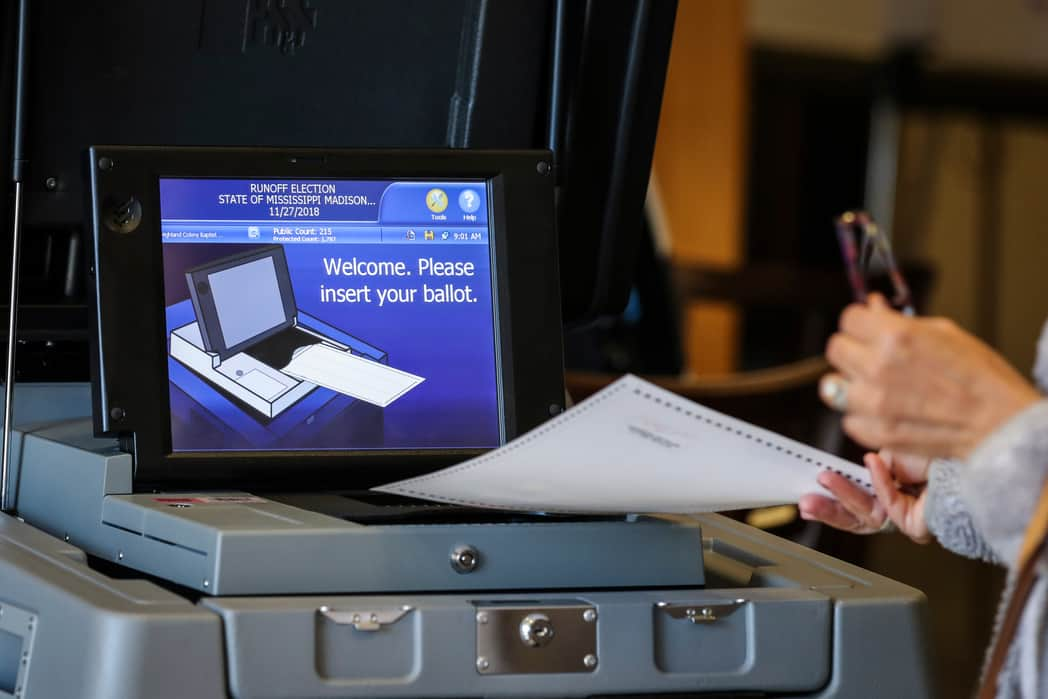
Ballot curing refers to the process of correcting any errors on ballots in the case of any discrepancies to avoid the ballot being rejected and therefore not counted in poll results.
What is the deadline to cure ballots in Mississippi?
Tuesday, November 10, 2026.
How do Mississippi voters cure their ballots?
If you did not have proper identification when you went to go vote and had ro submit an absentee ballot, Mississippi organizers encourage those voters to visit their circuit clerk’s office and present one of the accepted forms of identification: a driver’s license, a passport or a state-issued identification card.
How can Mississippi voters track their ballots?
If your voter registration was made inactive or did not appear in the system when you went to your correct polling site, organizers encourage voters to track their absentee ballot to ensure that it is counted.
Voters can contact their circuit clerk’s office to receive an update on their ballot or track their ballot by visiting Mississippi’s Secretary of State’s website. For additional assistance, Mississippians can call or text Mississippi Votes’ hotline at 833-678-4321 or the Mississippi Democratic Party hotline at 888-300-4350.
While many are shocked by a historically red state potentially flipping a Senate seat blue, Lumumba says the tight race and shift reflect a pattern Mississippians, particularly Black residents, have tracked for years.
“It reflects what we’ve been saying for the last 10 years: that Mississippi is a changing state. We’re a state of progress…of potential…of possibility,” she stressed. In 2020, though conservatives dominated the Senate, congressional and presidential races, voters voted unanimously to change the state’s flag, which previously featured Confederate emblems, legalize medical marijuana, and to change the procedures of its electoral college.
“The people of Mississippi, we are smart people. We are people that believe that we deserve better conditions, and we understand that better conditions equal conditions that are better for all of us, not just some of us. So, what we saw happen yesterday reflects who we really are in this state: we are people who care about the well-being of all our people, not just a few,” Lumumba explained. “Stop thinking that, oh, it’s just Mississippi; it’s always going to be the same. It’s not.”